Lyrics: Bright light city gonna set my soul Gonna set my soul on fire Got a whole lot of money that's ready to burn, So get those stakes up higher There's a thousand pretty women waitin’ out there And they're all livin’ (the) devil may care And I’m just the devil with love to spare Viva Las Vegas, viva Las Vegas How I wish that there were more Than the twenty-four hours in the day Cause even if there were forty more I wouldn't sleep a minute away Oh, there's blackjack and poker and the roulette wheel A fortune won and lost on every deal All you need‘s a strong heart and a nerve of steel Viva Las Vegas, viva Las Vegas Viva Las Vegas with you neon flashin’ And your one arm bandits crashin’ All those hopes down the drain Viva Las Vegas turnin’ day into nighttime Turnin’ night into daytime If you see it once You’ll never be the same again I’m gonna keep on the run I’m gonna have me some fun If it costs me my very last dime If I wind up broke up well I’ll always remember that I had a swingin’ time I’m gonna give it everything I’ve got Lady luck please let the dice stay hot Let me shout a seven with every shot Viva Las Vegas, viva Las Vegas, Viva, viva Las Vegas
Las Vegas - or, rather: Gambling Capital of the World, Entertainment Capital of the World, Glitter Gulch, Lost Wages and Sin City!
This is the city that unites all the pleasures in the world, and the King himself sang about it. Even if you’re not a big fan of the rest of America or the West, Las Vegas’ myth and appeal sooner or later casts a spell on everyone. In the state of Nevada, the big desert, it is situated: the haven of thousands of people who dream to become the lucky ones hitting the jackpot, get a taste for the glamorous life, escape their everyday routine and get a kick out of risking everything. Nowhere else you can find as many casinos and entertainment shows as in Vegas; it is the city that lives 24 hours a day, lives life to the fullest and doesn’t look back.
Except when it comes to the symbolic representative of the city, who is none other than Elvis Presley.
These two figures have risen to fame tremendously in the late ‘60s and ‘70s and helped shaping each other’s larger-than-life images. He is still called the King of Las Vegas, not only for his many shows he mastered but also due to his one of a kind song “Viva Las Vegas”. Written by Doc Pomus and Mort Shuman in 1963/4, the song is featured in a film (of the same name) starring Elvis, which became his most successful movie. This ode of admiration and appreciation performed before becoming the star of the city shows his genuine liking of it and makes it evident why the figure of Elvis has become such an important one in Las Vegas.
The song contains many positive images of the West such as the idea of the realization of the American Dream; the idea that everything is possible-even in the desert, where there is nothing to grow or cultivate on, you can create something that lasts and steadies itself. Las Vegas has succeeded in turning the negative connotation of fire, hotness and the devil into something positive:
“Set my soul on fire (…) I’m just the devil with love to spare (…) let the dice stay hot”
Linking passion, one’s heart desire and love to these themes, it transforms a disadvantage into a possession worth striving for. Fire and burning do not always have to be sinful (although it is also a huge part of Vegas) but can be life animating and making your blood boil of excitement. To live for the moment is another element that comes across quite clearly: It is better to have played the game/life and lost; that is more worth than not having tried at all. You have to risk a lot in order to have the chance to gain a lot.
That is what makes Las Vegas so attractive to Europeans; surely you can gamble in Germany or any other country, too, but ‘the West’ in America offers this mysterious, thrilling and wild atmosphere in a far bigger scale. Being able to say “I played poker in Las Vegas” is absolutely more notable than saying to have played anywhere else.
“How I wish that there were more than the twenty-four hours in the day”
In such a luminous and never sleeping city time also plays an important role. When squandering money in the casinos it is all about the presence, the Now, having in mind the possible bright future. Thus it is normal to be longing for an expansion or stretch of time; the happy experience has to be enjoyed as much and long as possible. And since money can buy time, you can very easily become addicted trying to get more money and more time.
“Viva Las Vegas turning day into nighttime, turning night into daytime”
This reminds me of the liberated feeling of having the freedom to stay awake all night or going to bed at the time that I wanted to when coming of age. The power to fulfill these infantile dreams is a huge magnet that pulls many tourists and visitors to this particular city even though it is more show and staging than actual freedom or everlastingness.
The illusion becomes reality in this city: You can be whoever you want to be, the neon flashin’ distracts and disperses all your problems and makes you rethink everything you have experienced so far:
“If you see it once, you’ll never be the same again”
Of course, Las Vegas has also a lot of downsides and isn’t seen by everyone as the oasis of chances and fortune. It is said to be money-driven and heartless; it lives only for its commercial aspect and people are not provided with chances but are being stripped off their money and badly treated. The exaggerated show facet of Las Vegas might be seen as an indicator of superficiality and of containing no real substance, which is often named as a prejudice of Germans against Americans.
I like the song and the image of Las Vegas anyway because it celebrates one side of ‘the West’ that isn’t necessarily only about money or something material; it circles mostly around the idea of hope and the belief in something good, and it is an American city that’s an exception to the rule by connecting many people and nations in a way that no other city is able to: They have the magic of the past in form of the spirit of Elvis, the main focus on the present and its fugacity, and the fascination of the unknown but bright-looking future.
Country music stands for the American south as much as poverty, conservatism and the rural landscape.
Country music and with it especially Nashville, Tennessee, is a dazzling, safe contrast to the many negative connotations one may have thinking about the American South.
Why does country music stand for the south? It originates in the folk traditions of the British Isles and mixed with the traditions of the African slaves and other immigrants.
With the development of the radio in the 1920’s country music became popular all over the country. The first country radio station was from Forth Worth, Texas. Nowadays Nashville, Tennessee has the biggest country music production and is known everywhere as the Capitol of country music.
Since singers like Taylor Swift or Carrie Underwood became more popular, country music is getting more and more popular (again) for a younger audience and also world wide. Today Taylor Swift is one of the most successful American musicians, with only 23.
Many TV and film producers recognized this wave of popularity and TV series like “Nashville” became more and more popular not only within the US but also worldwide. Another example is the movie “Country Strong” from 2010. This movie is a good example of how the south (and with it especially the country world) is presented in popular culture.
The following I would like to take a closer look at two of the four main characters and the movie “Country Strong”.
The main characters are portrayed by Gwyneth Paltrow (as Kelly Canter), Tim McGraw (her husband James Canter), Leighton Meester (as Chiles Stanton) and Garrett Hedlund (as Beau Hutton).
The story is about a former Country superstar (Paltrow), who struggles with alcoholism and loss of her unborn child and a rising artist who is under-confident (Meester).
The setting is Nashville, Tennessee and Dallas, Texas.
This movie shows many southern stereotypes and also a lot of stereotypes found especially in the country music scene.
First of all the language stands out. Although neither Paltrow nor Meester are from the South they talk in a very southern accent throughout the entire movie. When Kelly (Paltrow) is not on stage she is wearing plaid shirts and jeans that make her look very stereotypical southern. Also all the men surrounding her always wear cowboy hats.
The following I would like to focus on the main character Kelly Canter (Paltrow) as a female stereotypical southern woman and Beau Hutton (Garret Hedlund) as a modern southern man.
Kelly Canter is a fallen former Country Star who is trying a come back but is not ready for it. She is trying to express herself in her songs, but although her therapy isn’t finished yet she wants to go back on stage.
She expresses the typical Southern Belle to the outside world (especially to the media and to her fans) but on the inside she is hurt. She has a public breakdown, because she falls of a stage during one of her concerts while being drunk. Due to that she loses her unborn child. She tries to recover but fails doing so. After a couple failed attempts do be “the old Kelly” she finally has a great concert, but she is still hurt inside. After the concert she commits suicide, leaving a note quoting Jimmy Webb:
“If you see me gettin' smaller I'm leavin' don't be grieving .
Just got to get away from here
If you see me gettin' smaller don't worry I'm in no hurry
I've got the right to disappear“
Her story in this movie can be seen as a critique to the image that the media is trying to show to its audience. The Country world is always show as a perfect world on its own, where everybody has to be flawless to the outside (See Leann Rimes, Faith Hill, Shania Twain, etc.) In the end she fails holding up this flawless image and her only solution is to commit suicide.
There is also a male counter part to Kelly Canter – her sponsor Beau Hutton (Garrett Hedlund). He is a musician and later on her affair (although she is married). He also has a southern accent, is almost all the time wearing a cowboy hat, doesn’t talk much and is very manly and muscular. He drives an old truck and reminds of a lonesome cowboy. He helps Chiles when she is unable to perform on stage and supports Kelly the best he can. Women love him; he starts an affair with Kelly Canter but then starts a relationship with Chiles.
Beau represents the stereotypical southern cowboy. He is very handsome and doesn’t need to talk much. He seems to be restless and is still looking for great success. But he always looks good by doing so and even when Kelly dies, he doesn’t show up at her funeral but watches from the distance.
All in all, the movie “Country Strong” shows a lot of stereotypes within the country world and also the US South. Although the protagonist Kelly Canter (Gwyneth Paltrow) seems to be in contrast to the dazzling country world, she also embodies the typical (struggling) southern belle. She is always pretty (even when committing suicide!), classy, knows what to say and is portrayed as a victim of the media. Also stereotypical for the south stands Beau Hutton as a lonesome cowboy. Although the movie seems to want to show the downside of the country world, it is full with stereotypes the movie plays with.
Interesting in terms of the representation of the south are the songs, which also brought an Academy Award Nomination to the movie, but here is a closer to the song “Country Strong”. This song is sung by Gwyneth Paltrow and is the last song character Kelly Canter sings before she commits suicide.
The title “Country Strong” already is a reference to the stereotype, that Southerners, and also other people who don’t live in the city, are “stronger”, like the lyrics say “hard to break”. Southerners are said to be closer to nature, they depend on nature and just like nature they can be “rough” and persistent (“Push me in a corner and I’ll come out fighting”) and can stand enough. Furthermore there is a reference to the religiousness Southerners are connected with. (“I may lose but I’ll always keep my faith”).
This song shows up a lot of stereotypes the south is connected with, but it is also important to keep the story in mind. After the (very successful) performance of this song, character Kelly Canter commits suicide. Therefore the song can be read ironically and showing, that these stereotypes are not true; Kelly didn’t “come out fighting”, at least not this last time.
“I know you see me like some wide eyed dreamer
That just rolled in off up a dusty Midwest bus
Yeah, on the outside I look fragile
But on the inside is something you can't crush
'Cause I'm country strong Hard to break
Like the ground I grew up on
You may fool me and I'll fall
But I won't stay down long
'Cause I'm country strong
I have weathered colder winters
Longer summers without a drop of rain
Push me in a corner and I'll come out fighting
I may lose but I'll always keep my faith”
To sum up one can say that the movie lives through stereotypes but not entirely without questioning them. Especially two of the main characters Kelly Canter and Beau Hutton are a stereotypical (troubled) Southern Belle and Cowboy. But especially the Southern Belle gets questioned and criticized; the moment she seems to have back her grace she dies.
This movie shows just a very special “world” within the south, but also this “world” is build upon a lot of stereotypes that are also typical for the south and also the west. This movie shows a lot of those. Some stereotypes/prejudices are criticized at the end when Kelly Canter dies (like the role of women and the influence of media in popular culture) and some are especially supported like the role of men (Beau as a stereotypical cowboy) and the appearance of women and men (boys wearing cowboy hats, and everybody is wearing plaid t-shirts and cowboy boots) also, like in the song “Country Strong”, the people are really close to there hometown which is also represented in the end when Beau turns back to small stages and Chiles (actually a rising country star) following him.
Sources:
Country Strong. Shana Feste. Screen Gem, 2010. DVD.
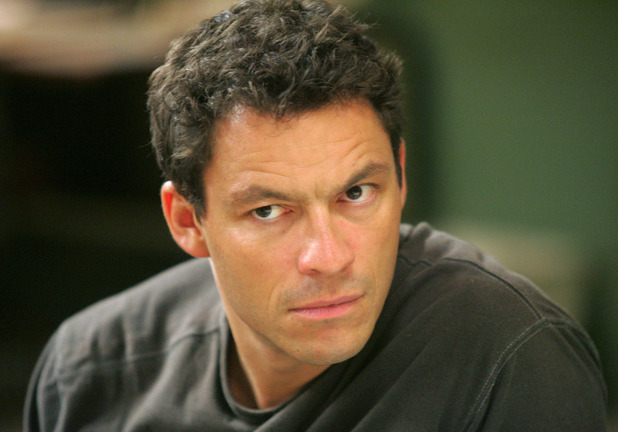
When trying to find a series or song to write about in our course blog we came across some interesting and suitable ideas. What caught our attention most was the TV show The Wire.
DIFFERENT - REALISTIC - DANGEROUS
The Wire is an American crime drama series, sometimes also referred to as a cop series, taking place on the streets of Baltimore, Maryland. It is mainly written and produced by David Simon, a former crime reporter who has experienced the city as such, and broadcasted by HBO. The first episode aired on June 2, 2002 and the last on March 9, 2008. The Wire has been on the air for five seasons while each consists of ten to 13 episodes. The seasons concentrate on different socio-critical topics like drug abuse, the American school system or the presence and influence of media nowadays.
Furthermore The Wire was nominated for several awards such as the “Primetime Emmy Award”, “WGA Awards” or “TCA Awards” and also won some including “Time Magazine’s Best/Worst List” for Top Television Show (in 2002 and 2006) as well as the Crime Thriller Awards (2009).
In contrast to usual drama series The Wire is not just another good cop - bad cop show with always a crime and a solution. “The Wire is life” - based on people that exist or did exist and although there is not really a main cast, it is noticeable that most actors are men of black heritage with twisted histories, fighting for their existence.
“David Simon has painted the most vivid and compelling portrait of the modern American city.”
The Wire is a television series shot to show the truth; the real unfolded life as it is not only in Baltimore but in cities all over the world where drugs, alcohol and social differences are highly present.
Even though The Wire was not that much a hit and the audience not as big as the producers hoped it to be, it is said to be one of the best TV shows of all time - an “epic novel” criticizing the socioeconomic inequalities caused by a capitalistic system in a completely new format where dramatic background music and close-up shots are less important than the real story.
“The Wire is not a story about the America, it is a story about the America that got left behind.” (David Simon)
The Wire is “good and dark and it has to be that dark to open people’s eyes” (Nick Hornby) because there is a lot of poverty and people fighting for better living conditions behind the curtain of health and wealth.
The series may irritate the viewer at first glance. There does not seem to be any arc of suspense, the amount of people and protagonists introduced seems endlessly and arbitrary. The Wire is more than a typical prime time crime thriller, it rather tells the story of a city and its fate. One gets to know police forces, labor unions, journalists, teachers and drug dealers.
One of these policemen is Detective Jimmy McNulty, an earnest, hardworking rebel, who does not care about the orders of his supervisors, but rather takes matters into his own hands. His eternal enemies are drug dealers, which seem to be replaced often, depending on power struggles and drug wars.
The leaders of the most important syndicate appear to be Avon Barksdale and his right-hand man Stringer Bell.
Keen on catching both of these criminals the special committee working on this case starts to monitor Barksdales and Bells phone traffic (this is where the show gets its name from: “to wire” meaning “to put a trace on one’s phone”), this however turns out harder than expected. The committee consists of officers unable or unwilling to do proper work, additionally Stringer Bell is wittier than expected, since it is soon to be found
out that he attends courses in managerial economics at the local university and organizes his criminal gang highly professional. Given the fact that McNulty’s chiefs are more involved in power games and intrigues than into actually solving the case, leaves the audience puzzled on which side, if any, deserves their sympathy. Eventually Avon Barksdale gets caught due to his brothers affair with a stripper, who works at the strip club where the syndicates headquarters are located. Who believes this to be the end of the story, has not yet realized how complicated and twisted the relations are. Possibly they reach up to the highest and most dignified positions…
One might wonder where we can draw a connection between this TV show and studies of American regionalism. As stated earlier The Wire is based on people that exist and therefore 150 people out of the circa 200 actors come from neighborhoods the series takes place in. Also the anecdotes and personalities are inspired by reality and represent the current problems of cities like Baltimore.
The connection is not to be seen as part of e.g. The South or The West but rather as traits of densely populated areas and big cities that can be found throughout the United States.
What pops into your mind when you think of the Midwest? Maybe you think of it as America’s heartland or rather fly-over country? Generally, the Midwest is known for its agriculture, small-town life, and its middle-class people living an average life. Also, the people stand for the “real” American values such as working hard, being down-to-earth without any fancy lifestyle. Images like trailer parks, industrial areas and poverty-ridden regions are probably not your first associations. However, these are typical images of Detroit City which is part of the Midwest, too.
We were interested in this “other” depiction of the Midwest which is why we chose the movie 8 Mile as our topic.
The movie is about “B-Rabbit, a wannabe [white] rapper from the wrong side of Detroit’s 8 Mile” (IMDb) trying to escape the vicious circle of bad jobs, living in a mobile home with his mother and not being accepted as a rapper in the black hip-hop scene.
But first some general information about Detroit: Detroit is the capital of Michigan, located in the south-east of the state. The total population in 2012 was approximately 700,000 with 82 per cent black persons. The high rate of black people living in Detroit is one of the common images of the city as well. In contrast to this, almost 80 percent of the suburbs are inhabited by white people. With the industrialization and the development of the car industry in the twentieth century, Detroit became “the automobile capital of the world” (Bromberg 621). Until today, Detroit is the domicile of one of America’s biggest car companies: General Motors. It also hosts the biggest motor show of the USA, the NAIAS.
Between the 1970s and the 1980s Detroit suffered from a weak economy indicated by high unemployment leading to social conflicts. The car industry produced only half as many cars as it did in the 1960s. Social conflicts were reflected in the population becoming poorer and an increasing number of crimes. All in all, Detroit became a run-down city (Bromberg 617).
8 Mile Road, as another symbol of the city, can be seen as a division line between the black and the white population, downtown area and suburbs and between lower and middle class. That’s also what the title of the movie hints at.
Rabbit comes from the 8 Mile Road and grew up in one of the mobile homes which are typical for this area. He works at a car factory in Detroit which he does not like but it earns the money. After he and his girlfriend have broken up he has to move back to his mother and his little sister Lily. His mother, an alcoholic, does not have a job and she has a relationship with one of Rabbit´s former schoolmates. At some point his mother is nearly being evicted from the trailer which causes a fight between her and her boyfriend. After Rabbit interfered, the two men end up having a bad fight. Summarized, one can say that this life in a trailer is dull and hard for everyone who lives there. They struggle from not having enough money and being without prospects. Rabbit hates it and is trying to get away from the trailer and this life by working extra-hours to get some money and by trying to become successful with his music.
This leads to the second conflict that is a major theme of the movie: The struggle of the white guy to be successful and to be respected as a rapper in the black hip hop scene.
Throughout the movie Rabbit and his friends Future, Cheddar Bob, DJ IZ and Sol George form the 313 (referring to the postal code), a group of wannabe rappers, keep having physical and psychological conflicts with their worst enemies, the “Leaders of the Free World”. Rabbit has a hard time gaining respect from the black rappers, they make fun of him for being white and call him a Nazi, gay and all kinds of other insults. After a performance failure in Rabbit’s first battle, he takes his chance and eventually wins every round in the second battle. In the final round he is performing so well that his competitor Papa Doc from the “free world” does not even try.
We think the movie depicts the stereotypical images of the Detroit area very well and by showing two major conflicts of the movie we tried to emphasize those images. 8 Mile shows the tough conditions under which the people live and how hard and sometimes hopeless their life seems. On the other hand it shows the story of Rabbit who succeeded in making something more out of his life.
In addition, the movie shows that there is also another part of the Midwest. Therefore, the City of Detroit can be seen as a striking contrast to the typical, rather rural areas. Not only the agricultural images but also people's values and goals differ a lot and need to be considered when talking about the Midwest.
Works Cited:
Bromberg, Marita, Kruse-Etzbach, Dirk. “USA - Große Seen: [Tipps Für Individuelle Entdecker; Mit Reisekarte]“. Dormagen: Iwanowski, 2009. pp. 617-621. Print.
"Detroit History." City of Detroit. N.p., n.d. Web. 22 June 2013
"Plot Summary for 8 Mile." IMDb. N.p., n.d. Web. 22 June 2013
One of the best ways to see how homosexuality was treated in the American West between the 1960’s and 1980’s is to take a closer look at the movie “Brokeback Mountain” based on Annie Proulx’s same named short story first published in 1997. The movie itself, directed by Ang Lee, was released in 2005.
The movie deals with two cowboys working together at Brokeback Mountain (Wyoming) in the summer of 1963. After a while, working as shepherds, they spent intimate nights with each other. When their work is done their contact breaks up. Years later Jack (Jake Gyllenhaal) contacts Ennis (Heath Ledger) via postcard. This is the start of their secret love affair, which was affected by the Western way of life.
The first thing that comes to your mind when thinking about the American West is the representation of masculinity through western heroes and cowboys. Considering the postcard images Western men are supposed to be strong, fearless, hard working and womanizing, independent men. In this Western world homosexual affinity was absolutely taboo and not tolerated in any way.
This aversion for homosexuality is also presented in several scenes throughout the movie. One of the scenes is when Jack enters his former boss’s office asking for another job one year later.
This scene shows the intolerance and the contemptuous attitude towards homosexuality very clearly in these days. Their old boss assumes a homosexual relationship between Jack and Ennis because of seeing them joust only once. In this part of the movie it’s the first judgmental confrontation with their homosexuality by someone of the homophobic society. It’s also the first time that the audience sees Jack’s feelings towards Ennis, when he is asking for him and is obviously unable to forget. For him it wasn’t just a one-night stand. Instead he developed some sincere feelings for his former colleague.
Another scene representing the society’s shame about the existence of homosexuality is the call when Ennis finds out about Jack`s death throughout his wife Lureen (Anne Hathaway).
Here is shown how ashamed Lureen is about her gay husband. Even though she knows Ennis was her husband’s lover she doesn’t tell the true story about his death. Jack was beaten to death by some men because of his sexual attraction towards men. But instead of telling Ennis this story, she lies and tells him about a car accident where Jack was killed by his car’s rim, while changing it. The reason for this lie is not clear. On the one hand it could be possible she doesn’t want Ennis to feel guilty and on the other hand she probably just wants to keep her reputation in society. But the second variant is more likely because of the way she’s acting during her talk with Ennis.
The most striking scene showing the social position of homosexual people in the society is when Ennis tells Jack about an incident that happened in his childhood.
It’s terrifying how people in that time act when they don’t accept someone else’s sexual orientation. The man in that scene is tortured to death because he doesn’t stick to the status quo of the society. The fact that something like this is also shown to children to scare them off and make them notice the falsity of homosexuality is even more shocking.
This formative event is one of the reasons for Ennis not to come out of the closet, because he’s afraid of the society`s reaction. Maybe he also doesn’t want to accept his sexual orientation because he wants to represent the image of a typical western man who lives on a ranch and cares for his family. Although he has the opportunity to live with Jack, after he got divorced, he doesn’t take this chance and however, dates another woman. Even though he can’t let go of Jack and they still meet up once in a while. Ennis’s mental conflict is a main issue of the whole story. On the one hand (as we already mentioned) he can’t accept his homosexuality but on the other hand he’s even jealous when Jack sleeps with other men than him.
On the other side Jack is way more open-minded towards their homosexual relationship and even wants to leave his wife to build up a life with Ennis. He’s not as patient as Ennis and needs the physical interaction with men more often, which is the reason for him to go to the Mexican red-light district. Maybe his open-minded attitude towards homosexuality is also based on the fact that he was never confronted with society’s aversion towards homosexuality, like Ennis had experienced as a child. But in the end this way of dealing with his sexual attitude is the reason for his death.
Finally we come to the point why we’ve chosen this movie. In our opinion this movie is very special in presenting a picture of the American West in a completely different way than other movies do. The topic of the story is not the typical “John Wayne-postcard-image” of the American West as often shown. Furthermore it is important to talk about the topic of the aversion towards homosexuality because it’s not only something that happened in the past, but still is a problem in the society nowadays (not only in the American West).
Sources: Brokeback Mountain. Dir. Ang Lee. Focus Features, 2005. DVD.
From the makers of Gossip Girl, Hart of Dixie created by Leila Gerstein, first aired on September 26th 2011 on the CW. Two years later it also aired in Germany on SIXX. Starring Rachel Bilson, former main character from the O.C., as the main character doctor Zoe Hart. It’s a comedy-dramatic show that is set in the South, dealing with conflicts of the area as well as showing stereotypes and anti –stereotypes being brought to life at the Warner Brothers lot in Hollywood, California.
Having watched the show and being pretty addicted to it we thought it would be a fitting artifact for our class blog. We wanted to focus on the different characters of the show with its stereotypes and how they actually change throughout the series and the little fictional town BlueBell itself.
Zoe Hart “Oh ok, someone needs to tell the people of this town that it's 2011”
New Yorker to the core, Zoe Hart is focused and dedicated to become a cardio-thoracic surgeon, just like her father. The big city image is reflected in her way of talking very fast and moreover in her style of clothing. She's used to the hectic, fast forward and anonymous living in the big city. She is being told to work as a GP for a year to become a better doctor, so she gets the fellowship she wants.
Zoe decides to accept an offer from a stranger, Dr. Harley Wilkes, to work with him at his small medical practice in BlueBell, Alabama. Turns out that Harley had passed away and left his half of the medical practice to her in his will. Zoe Hart couldn't be more out of place although she's trying to fit in and adapt to life in a small close-knit town. It's obvious that two worlds are crashing into each other. Zoe often finds herself in trouble through not understanding the prideful Southerners' ways and also the due to the town’s lack of acceptance and integration. Her way of thinking still causes a lot of difficulties in adapting into the southern culture and the small town.
George Tucker “BlueBell is who I am”
Everyone loves George Tucker, town’s golden boy and a real southern gentleman; he also is the only lawyer in BlueBell, working at his own small firm. He used to live in New York for 2 years, to work at a renowned law firm. Breaking up with Lemon because he has deep feelings for Zoe, he finds himself not just torn between two women but also torn between his hometown BlueBell and the adventurous New York City, two worlds which couldn’t be more different.
Wade Kinsella "I would offer you to give you a ride but I don't want you to get any ideas”
Being a womanizer and a bad boy he is a bartender at the Rammer Jammer. Even though he doesn’t want to show any feelings he cares a lot about his father who is a drunk. Handing him money whenever his father asks for it, Wade doesn’t know that he is actually burying it all in his backyard to save it for his son. Having deep feelings for Zoe, he still tries to keep up his “I don’t care about anything” attitude trying to remain the cool guy, which turns out to be quite fatal for him.
After Wade and Lemon win a big prize together they decide to buy the Rammer Jammer and become partners, fulfilling his dream of having his own bar one day, making him feel like he really achieved something instead of just feeling like a failure all the time.
Lemon Breeland “Why do you make fun of us? Why do you laugh at the things we eat? Why do you mock our traditions? Is it because you think you're better than us?”
Since her mother left when she was younger, Lemon is taking care of her father, Brick Breeland, and her teenage sister Magnolia, trying to replace her mother as good as possible.
You can’t help but notice that Lemon dislikes Zoe even more than her father does, not really surprising, considering Zoe being the reason her engagement to George Tucker broke. Although she wasn’t too innocent herself, given her affair with Lavon, when George lived in New York. Zoe turns her life upside down, facing new challenges in her life.
Lemon being the epitome of BlueBell’s Southern Belles, is going through a lot of changes throughout the series. At first she is perfectly satisfied with just being a Belle, always looking perfect, with her main goal to get married and become a housewife, she suddenly wants to achieve more in her life.
Her first real attempt to work for a living, by sharing a catering company with her best friend didn’t work out too well. However after becoming a bar owner she really seems to be satisfied in her new role as a working woman.
Lavon Hayes “I am Mayor Lavon Hayes”
After a great career as a linebacker, who played in the NFL for ten years, Lavon Hayes decided to move back home and was elected Mayor of BlueBell. Lavon is Zoe's best friend and tries to mediate between Zoe and the town. He combines the old and the new south in his character. Lavon is a local boy and proud of his home town. He cherishes and celebrates the different traditions with pride. He is representing a new generation and a futuristic way of thinking by promoting the town and its attraction. People look up to him and treat him with a lot of respect. He loves to talk in the third person to underline his status. He really fits into the position of a mayor because he exactly knows who he is; he knows the town and the people. He is easygoing and would make any sacrifice to showcase BlueBell as the place to be. Lavon owns a plantation where his great, great grandparents once worked.
Brick Breeland “Dr. Brick Breeland is no one's assistant. Most certainly not to some arrogant New York newbie“
Brick Breeland is the home town doctor and symbolizes the past and traditional way of thinking. After Wilkes’ death he carried the sole medical responsibility of BlueBell. Compared to Lavon, Brick has a deeply rooted suspicion towards strangers and in this case people outside from BlueBell. He knows his town and the people by heart so he uses this advantage towards Zoe to show her that she is no threat to him with her medical abilities. Although he seems like Zoe's counterpoint, he always has the best interest of BlueBell in mind. Being left by his wife, he is very glad to have Lemon, who takes on the responsibilities of a mother role. He spoils both of his daughters and seems to be a little bit overwhelmed in some parental cases. But still, the southern values like being family orientated, loyal and hard working are combined in his character. Brick symbolizes the old fashioned, southern gentleman.
BlueBell is fictionally located around 30 miles from Mobile, Alabama. Its location is approximately where the real town of Point Clear, Alabama is situated. The fictional setting for Hart of Dixie, BlueBell, Alabama was founded many years ago, in 1702, by Cyrus Lavinius Jeremiah Jones.
It's about as traditional as a place gets. The main character Zoe Hart gets immediately confronted with the town’s traditions and festivities. She and Lemon first meet while Lemon and her fellow belles are in full Civil War-era garb in the town square, keeping BlueBell's tradition alive.
BlueBell's people are showing great values in loving and caring for each other. As a lot of real small towns in the south or in general, it has its own tons of town traditions, like various competitions and celebrations on the town square which are unique to their town (Gumbo Cook-Off, Planksgiving, Miss Cinnamon Cider Pageant, Turtle Derby,..). The story is often based on those events in the town. But not only are the town traditions important but also the family genealogy. The people are deeply connected with the past and the way they established themselves in the town's history.
They try to maintain the town in its historical values and are generally careful towards new things and people. BlueBell's inhabitants are sweet and down-to-Earth and simple but not in the "slow" sense but in the anti-materialistic sense.
Various stereotypes about the south are shown in the series but not in a ridiculous kind of way but to emphasize the differences between the culture clashes even more. These include: a bus dropping Zoe Hart off on her way to BlueBell in the middle of a field with a place-name sign: BlueBell 3 Miles, a kindly stranger in a pick-up truck immediately wanting to rescue her; women in colorful hoop dresses dancing in the town square; a mayor who lives on an old plantation and everyone talking behind Zoe's back because she's a "Yankee."
The southern hospitality is a huge priority to Bluebell: particularly warm, sweet, and welcoming to visitors to their homes, or to the South in general. But whereas Mayor Hayes and George Tucker are welcoming Zoe the majority of Bluebell's inhabitants are suspicious and treading her as an intruder.
One would think that privacy in those small towns is nearly non-existent that is if you take BlueBell as a role model.
Every fact and gossip, howsoever small and unimportant it is, will be transformed into the spectacular subject of the town. It seems like a natural thing and a logical consequence if you put the town and according to that the people in the center of attention. A paragon would be the four old ladies sitting on a bench in town square talking about the latest gossip.
But how does “Hart of Dixie” deal with the “real” South and its issues?
The panel discussed the South with reverence. There aren't any special episodes addressing racial issues in the Deep South. This show wants to keep it light. “Hart of Dixie” presents a small town where characters of different ‘races’ get along by using a divers cast including African Americans and Asian Americans as part of BlueBell's inhabitants.
It tries to show the rural South in a fair light and it may help to make the South a little more accessible to some people who have never been there. But it is still a show in the romantic dramedy genre.
There are some critics about the fictional town of BlueBell and how it would stand to represent the South as a whole. In our opinion some of those critics are not justified. “Hart of Dixie” never proclaimed to illustrate the “real” South. It's a comedy-drama not a documentary report. Of course one can expect an insight into the south because of the setting of the series but it is clear from the beginning that the series is playing with the image of the south and its people in an entertaining way be it through the Characters or the town itself. We can't lose sight of the entertaining aspect of this television series. The humor is the key. The show does touch upon racial boundaries (the relationship between Lavon and Lemon) and Deep South stereotypes, but at its heart, it's a feel-good comedy. Its complete disregard of racial relations and the tension that still exists in the South e.g. by cast an African American as the mayor of Bluebell. The series doesn't show any difficulties of having a black man as the head of the town. Also he's living and owning a plantation where his relatives used to work at. The series shows disregard for the connection to slavery.
“Hart of Dixie” doesn’t address the complexities of interracial relationships in the South, relationships that characters on the show float into and out of with no worries or reservations and consequences. The series shows in this particular aspect a way of forward thinking and demonstrate how it should be, but unfortunately not how it is nowadays.
On her way to become a cardio-thoracic surgeon, Zoe Hart, a young New Yorker doctor, didn’t get the fellowship she wanted. As she said, “[she] put all her eggs in the wrong basket”. Trying to become a better doctor, she takes up an offer to work as a general practitioner in BlueBell, Alabama.
A whole new world, she could have never imagined opens up to her in BlueBell. She finds out that the old man who kept offering her a job at his practice, was her biological father, who left her half the practice after he died. In BlueBell things are completely different, compared to New York City.
Not all of the people in BlueBell are too happy about her arrival. It seems like those southerners are not too happy about changes. Zoe tries to gain patients in order to keep one half of the practice, which is kind of difficult given the fact that not a lot of people want her in their small town in the first place. Besides the struggles at work Zoe finds herself having deep feelings for George who is engaged to Lemon, her arch-enemy. It seems like nothing is working out for her the way she was used to anymore. Although George calls off his weeding, Zoe doesn’t want to be a rebound girl and decided that he should find himself a girl that he really cares about and date her. He found that girl in Wade’s ex-wife, Tansy. It takes Zoe quite some time until she finally falls for bad-boy Wade. Their relationship starts off rather complicated but develops into something real, which Wade screwed up in the end.
The people of BlueBell grow to love and appreciate Zoe as a member of their town, just as Zoe grows to love the town and its people as well.
All of the characters have their ups and downs throughout the show, which keeps it interesting and makes you want to see what happens next. Among others the show is loaded with love stories, drama, medicine, fashion and lots of humor. It shows the romantic image of a southern small town as well as dealing with some of the conflicts of changes and integration. It’s a wonderful show and really worth watching. We can’t wait for the next season to start.
"The Heart of Dixie" what does it even mean? Some research told us that “The Heart of Dixie” was a phrase developed in the 1940s and 1950s by the Alabama Chamber of Commerce. The Chamber sought a more distinctive slogan for their state and promoted that "Alabama is geographically the Heart of Dixie". In 1951, with backing from the Alabama Chamber of Commerce, the Alabama Legislature passed a bill to add "Heart of Dixie" to automobile license plates. And according to the Oxford English Dictionary is “Heart of Dixie” the informal name for Alabama.
To us "Hart of Dixie" is not only a wordplay with Zoe’s last name ‘Hart’ and the actual word ‘heart’, since the series is about Zoe and her love life but also deals with all the difficulties that come with love in general, but also the ‘hart/heart’ more specifically about her medical abilities. Her assistant medical director criticizes her for not having enough HEART and sympathy for her patients and not caring enough for their personal issues. Furthermore it is looks like an Oxymoron, given her surname Hart sounding like the word “hard” in case of difficult to deal with, not soft or being ruthless but also means ‘heart’ which is the exact opposite to it. It describes her personal attitude and character at the beginning and implies her change throughout the series, when ‘hard’ slowly changes into ‘heart’. She is not only becoming a better doctor but more importantly she is becoming a better person.
There are probably only few cities that are more affected by prejudices than New York City. The metropolis which consists of five boroughs – Manhattan, The Bronx, Brooklyn, Staten Island and Queens – is the most populated city in the United States.
One reason why we choose New York for our project is its many facets. What instantly came to our mind when thinking about the melting pot were, of course, well-known sights like the Statue of Liberty, the Brooklyn Bridge, the Central Park and the Broadway Theatre, just to name a few. What is seen as a trademark of NYC is most likely the mass of skyscrapers giving the skyline of the city its high recognition factor, but also famous tale of the “American Dream”, which brings many people to moving to the “City that never sleeps” to start a better life and thereby turning New York into a place of high cultural diversity. But to be honest, we do not just associate good things with the region: a high criminality rate and stressed, unfriendly people are images of New York that stick in our heads without an actual explanation.
But where did we learn these ideas? Our group concentrated on two songs about New York City and tried to understand how these stereotypes were used in popular culture.
The first song we choose is “Empire State of Mind” by Jay-Z and Alicia Keys. Both artists, coming from NYC, in the song demonstrate a very positive, glorifying attitude towards NYC, although the negative sides like crimes are mentioned, too.
New York City is depicted as a city where “…[there is] no place in the world that can compare”, a melting pot that never sleeps, where there is nothing that does not exist. The bright lights are said to exhilarate people, the broad streets very inspiring. In the official music video the bright and vivid image is represented, too. We see the skyline, with seemingly endless illuminated skyscrapers and typical sights, for example.
In the song, Jay-Z and Alicia Keys deal with the “American Dream” in the way that they say that many people come to NYC because this is the “…concrete jungle where dreams are made” and that even people from the “ghetto” can become famous or fulfill their dreams in this city, as Jay Z himself managed it to do. On the other hand the singers state that “half of y´all won´t make it”, meaning that only few people have the chance to live the “American Dream” in New York City.
Secondly we chose the song “New York City” by Among Savages which gives a different and a more negative image of New York. The song is about the reality in the wonderful metropolis and it gives the notion of a city that is always in hectic with the many activities that take place there. Many people desire to at least achieve something in the big city, in order to fulfill their “American Dream”. But, a lot of uncertainties, disappointments, instability due to constant changes in the big city are involved. This makes NYC dwellers never to be contented with what they have. So many people work really hard to achieve something but this on the other hand leads to isolation which again leads to loneliness with no inner freedom. Lack of inner peace often contributes to fear. The fear of not achieving something despite the fact that hard work is involved. In this song, life in NY is presented to be very frustrating. Somehow, the song tries to encourage the people to take each day at a time and make the best out of it and never to give up, even though life in New York City can be really tough. The song insists on individual braveness and toughness. One has to be in a position to face the reality. This could involve certain difficult choices. For instance, to quit the city and not life because even though there are too many hardships in New York City there are still lots of chances to change the illusions into dreams.
In the Savages’ song, the American Dream “from rags to riches “is being challenged. By this we mean the myth that through hard work everyone has the potential to lead a happy successful life and that America is a land of freedom, fulfillment and meaningful relationships. The song tells us (you) to “Follow your dreams, but beware of the illusions.” This makes it clear to us that life in New York City is a reality and not a fantasy. By walking through the city, with its many skyscrapers, it gives somebody the feeling of being helpless “in the midst of all those buildings.” This can be an experience that can even make someone to “(…) feel like a child in a world that seems shapeless.” Somebody can also get a feeling of loneliness because it’s “hard enough to find a friend”. But “Where do you find peace in the middle of the City?” This is a difficult question to answer. For the city does offer any other alternative. The hectic life in the city automatically robs away your freedom. That´s why the song asks “Have you given up on freedom, while you spent your life earning the keys to set you free,” Here the keys can symbolize success.
In this song, we get to see the other side of the metropolis, its glorifying attitude and the reality about the “American Dream”, the dream which was once famous, has with time become a tale, an illusion on its own, to certain people. On the other hand, after we made comparisons with our first song, “Empire State of Mind” by Jay-Z and Alicia Keys, success through hard work is praised.
It shows how the romantic visions we tend to have of New York City, especially the desire to get rich and successful, is used in popular culture. That does not mean that the dream cannot be a reality.
Finally our group came to the conclusion that the “American Dream” “from rags to riches” can be true. Unfortunately, this does not apply to everybody. Some determinants are involved. One being the society and fate is another. New York as a city has not only a beautiful but also an ugly face. Some people are rich while others have to struggle to survive in the streets of New York City to make both ends meet.